
NativeStudyRefocused.com is a partner website of NativeStudy.com


Refocusing on
Cherokee Chief Lewis Downing
Soldier, Chaplain, Politician, post-Civil War Reconstructionist and much more
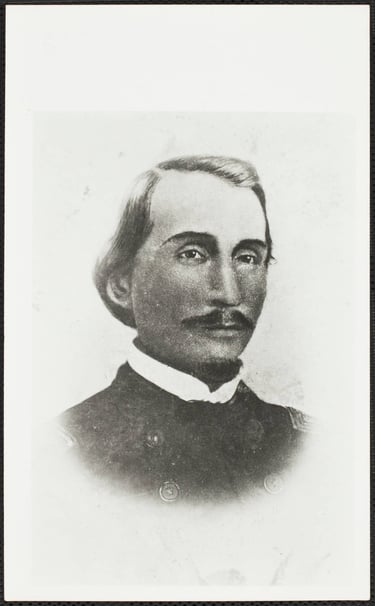
Check further below for details concerning the next volume with family records. Updated History-Heritage.
Below read our latest newsletter. Look for the asterisk below.
*
*
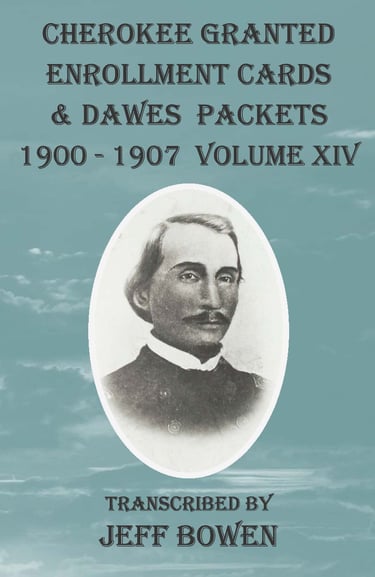
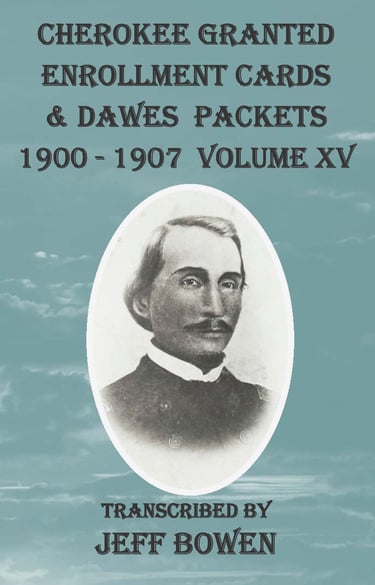
With this 'Milestone' of Cherokee documentation and achieving the fourteenth volume it was felt the future covers and images within this series should receive a pause or intermission so to speak and consider a history of one of the Cherokee leaders from times past.
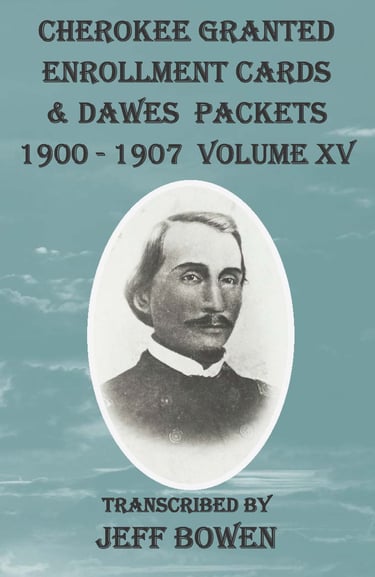
Chief Lewis Downing was chosen as the highlight of NativeStudyRefocused.com by offering a glimpse into who he was, some of his history and his actions involved in while representing his people and a new book cover possessing his image and hoping to show a little intermittent change amongst these wonderful documents.
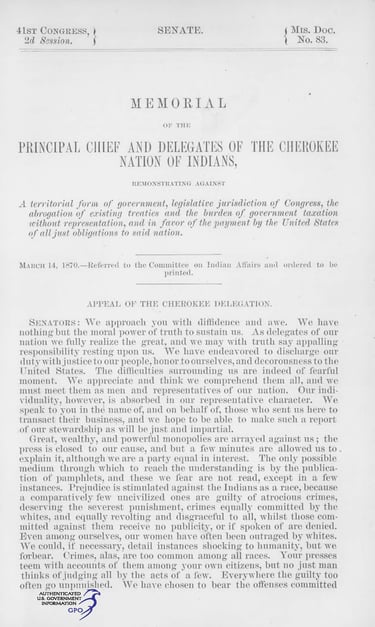
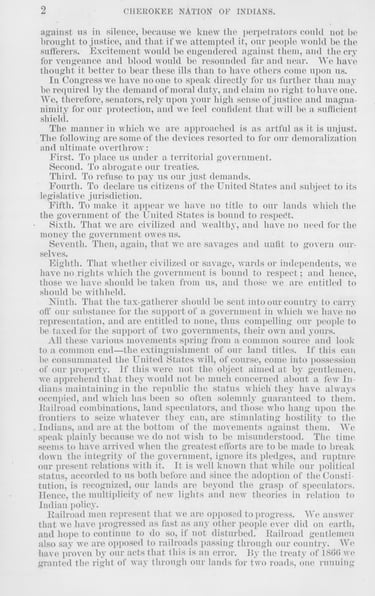
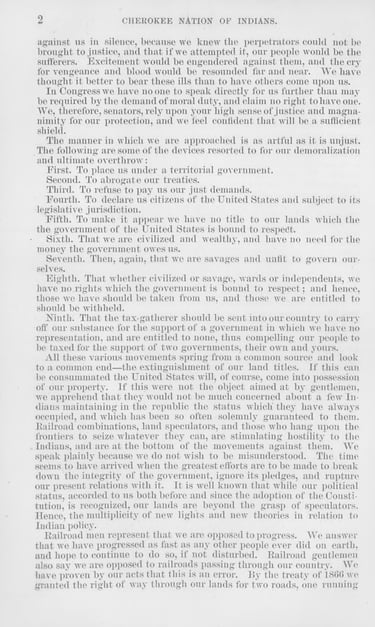
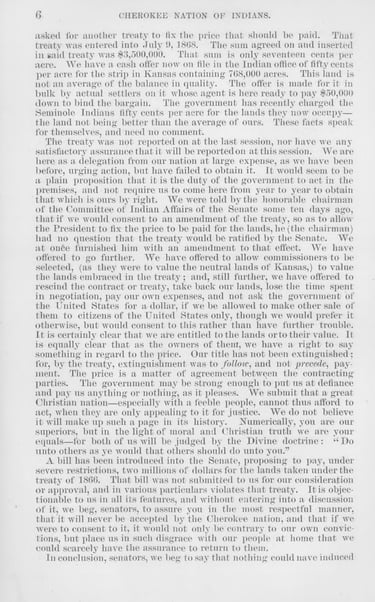
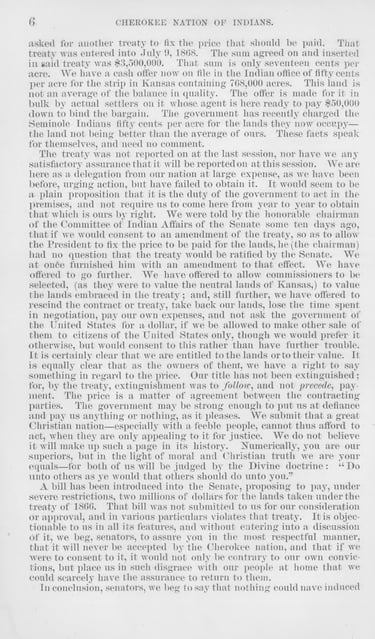
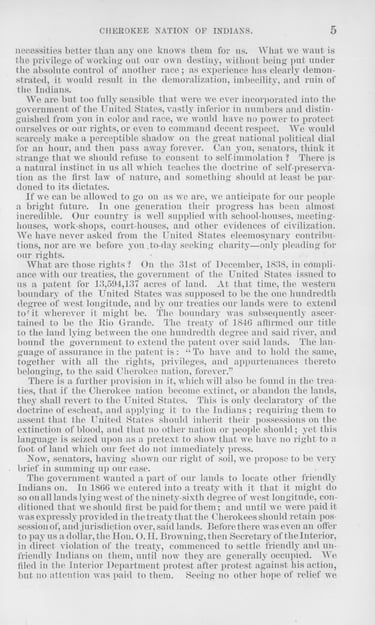
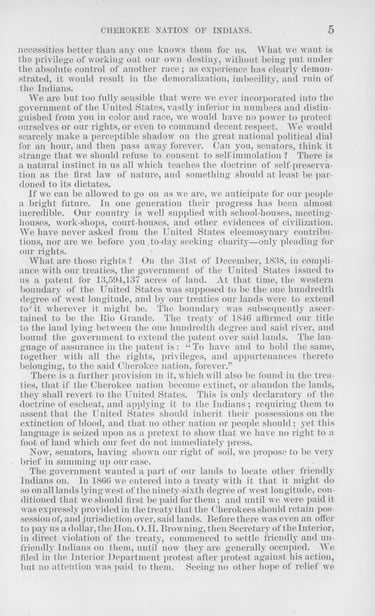
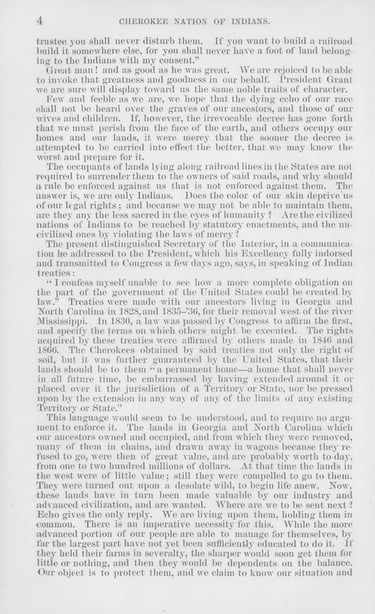
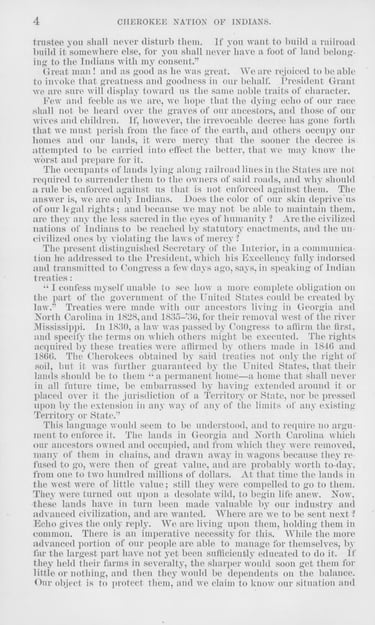
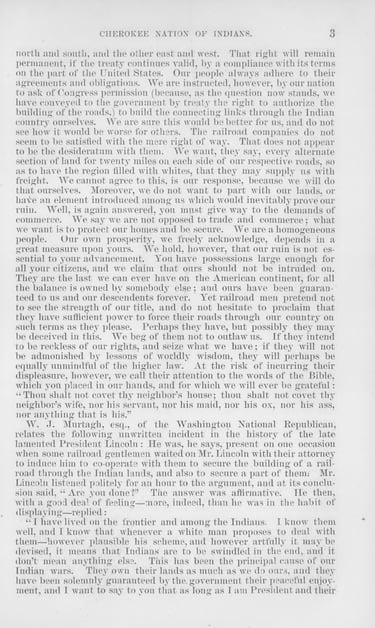
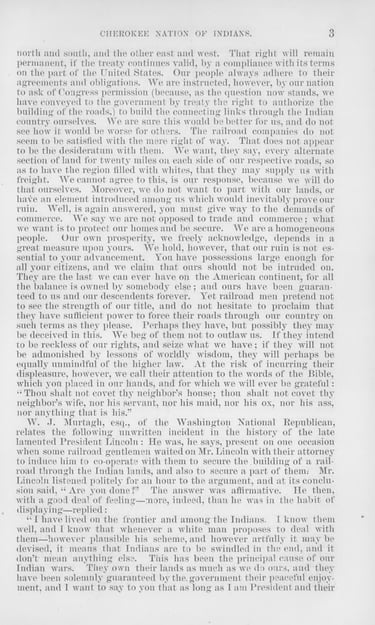
Memorial of the Principal Chief and Delegates of the Cherokee Nation of Indians, remonstrating against a territorial form of government, legislative jurisdiction of Congress, the abrogation of existing treaties and the burden of government taxation without representation, and in favor of the payment by the United States of all just obligations to said nation. March 14, 1870.
Below is a copy of the seven original pages found in the Library of Congress that involved Lewis Downing and other tribal members seeking to keep treaty agreements with the U.S. government through documentation and testimony with Congress who were forever trying to withdraw from the legal and binding agreements they made with all tribes. So to speak there was never a treaty the government couldn't break. "They made us many promises, more than I can remember, but they never kept but one: they promised to take our land and they took it." Chief Red Cloud (1822–1909) a prominent Oglala Lakota Chief.
This is to show it wasn’t just the people in need of proving who they were, but, also tribal (entities) disputes with the government to prevent Congress then from trying go back on the agreements or contracts or promises made with the Native people when they, the government wanted their land.


Now for a little biographical history for Lewis Downing:
Even at my age, darn near 80 years, there is no way to come up with a short story about the Cherokee though this personally concerns Cherokee Chief Lewis Downing, soldier, chaplain, politician, post-Civil War reconstructionist and much more. Chief Lewis Downing born somewhere between 1821 and 1823 and died November 9, 1872. He was born in eastern Tennessee. His father's name was Samuel Downing (born circa 1778-1780) with Cherokee and mixed blood. His mother's name was Susan, sometimes called Elizabeth, (born circa 1784), who was the daughter of Cornelius Daugherty, an Irishman and full blood Cherokee wife. Both parents of mixed Cherokee blood and European descent. Lewis' bloodlines also followed full blooded Cherokee intermarriages through early settlers and traders in the Tennessee-North Carolina-Georgia area. Daugherty being a very well-known name in Georgia (Daugherty/Dougherty) showing associations between the British/Irish/Cherokee intermarriages found so often in the Southeast.
Adding a little context to Lewis' background, he became a Baptist Minister circa 1842, became a Chaplain while within the ranks of the Confederate Army and later the Union Army during the Civil War. His religious background started when he was young while attending the Valley Baptist Mission not far from Murphy, North Carolina. Then after removing from the East to Oklahoma, 1838-1839 with Rev. Jesse Bushyhead's detachment West he continued with his education at a Baptist Mission in Indian Territory. You can read through books like Don L. Shadburn's Unhallowed Intrusion, Cherokee Planters in Georgia 1832-1838 or his Cotton Patch Chronicles to find extensive histories of mixed-blood Cherokee families throughout the early mission years. Not to mention reading actual documentation from The Moravian Missions to the Cherokees 1801-July, 1836 with daily entries covering activities, history and the lives of so many Native people and what they were dealing with at the time. Also you can find references like History of the Cherokee Indians by Emmet Starr and the activity from not just the Moravians but Presbyterian, Lutheran, Baptist and Methodist all chronicled through their mission work. It's no wonder he became a Baptist Minister with all of the Christian influence throughout the South in not just Spring Place but places like Creek-Path, Alabama near Fort Payne or Brainerd Mission in Chattanooga, Tennessee.
His being within both forces just shows that there was indecision not just among the Cherokee but also amongst others of the Five Civilized Tribes. The common hope among the tribal leaders that when the South had risen that they could have a better life with a new government. There was always so much dissension between the Cherokee and the government the Cherokee as well as the other Five Civilized Tribes placed their faith in the Confederate government. Though like most any group of people not everyone felt the same. So some went with the North and some went with the South. The Watie faction though staying with the Confederacy. Some of the Ross faction, though at first being with the Confederacy, eventually settled back within Union ranks.
When the war was over the Cherokee just wanted to have their lives and agreements with the Federal government but it seems that the Union had espoused that it isn't going to be that easy. The Cherokee had made a stand and they had enough people that went with the Union that Congress wasn't going to wipe out all agreements originally set but intended on making them feel their mistake though in their eyes they were just trying to get away from being mistreated in the first place.
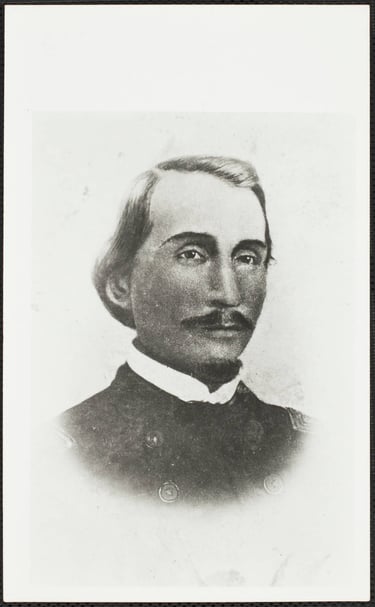
So Lewis Downing became as originally stated a Chaplain in the Confederate Army and afterward through tribal influence a Chaplain with the Union force during the Civil War. He achieved the rank of Lt Col for the Union Indian Home Guards. Below is a picture of him in his uniform.
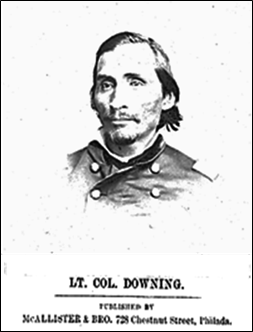
There's no doubt that Downing would become known for his efforts to unite the blood of his blood the very soul of his being, the Cherokee. Healing divisions that were brought about by the Civil War, the same needed to happen not only amongst the country but within the lines of his people. They had to come together and draw a line in the sand because they had a new enemy, though they had faced them before it was the U.S. government. After John Ross' death in 1866 Downing worked to heal those riffs between the different factions and promote the brotherhood of the Cherokee people. He faced the post-war hardships in land issues along with trying to bring together the government of the Cherokee Nation. He was elected to a full term as Chief during 1871 but died too early in 1872 in Tahlequah, Oklahoma.
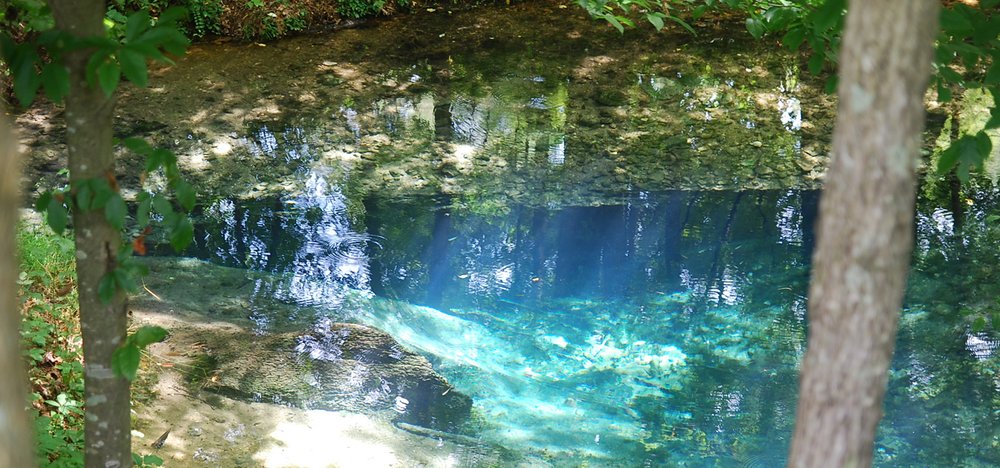
From personally seeing the Blue Mist while traveling through the Smokies to the Trail of Tears, to John Ross’ grave back again to John Ross and John Howard Payne, so many struggles to be felt through the years. So much in my heart and mind, while visiting the council grounds of Red Clay time and time again, so close to where Ross had taken shelter, Red Hill, Bradley County, Tennessee. I can see myself looking down into this small cove and feeling the instant coolness like a natural air conditioner and watching as the shade of the trees insulating the area and seeing the sunlight shimmering through the leaves just standing there in the quite; watching it penetrate the bluest water you will ever witness in your life. You can hear the breeze making the leaves tremble noticing the sunlight with an unsteady flow with penetrating shafts into the deep blue water as if the sun was coming in reverse from the ground. Looking down is a small runoff of water just quietly trickling and leading its way towards an obvious path, you reach down while cupping your hand, it's cold but you begin drinking from the most beautiful blue spring as thousands of Cherokees did before you as if God adorned it with one of the most beautiful colors from His rainbow. This was Red Clay.
Thinking he had escaped the Georgia Guard avoiding arrest being he was on safe ground over the border in Tennessee, it wasn’t to be; yet back along more contemporary times with the kind Cherokee friends throughout my years; the Tranters, Bradley's, Cooper's and so many more it strained this soul at times beyond composure thinking of the pain felt by their ancestors of those that befriended me in later years. So much so that one of them told me I had a Cherokee heart and if our ages were more separated she’d adopt me to be one of her own people. Yet the Georgians wanted him badly along with the papers they knew he and Payne possessed.
So for the time nearly creating an international incident with who they were after they the slovenly no good ruffians and Georgian thieves stealing Cherokee land crossed that line like a Politician without a shred of concern for those that elected them they broke the law, they crossed a line literally. They arrested two men who should have never been touched, likely threatening their very breath by gun point and sabre. You can see their hands tied and being drawn forward by a rope cinched over a saddle horn and dragged along a dirt road. Caged, their possessions confiscated.
John Ross's home already stolen, his wife gone while he was in Washington City just trying to save the Cherokee’s home, his home. His wife forced on a trail only to die of exposure. Quatie while giving her blanket, her protection, from the elements to a child in need, a wife gone forever and now they were after Ross himself, the devils had left Georgia creating havoc in Tennessee.
Yet the U.S. Army in time would force innocent people from their homes. People like Tsali or also known as Charlie, his only crime defending his wife as a bluecoat ravished her freedom by prodding her with a bayonet. Possibly drawing blood, maybe slicing her arm through her cotton print sleeve, the ragged edges bloodied. Tsali defended her and during the struggle a soldier died.
Next he wasn't just a victim once but was pursued only to be put to death with his sons. Executed by his own people as they were forced to make a choice with his permission for their freedom forever.
The difference in his pursuit was Tsali gave them the permission to sacrifice his life knowing his roots in a smaller son, other family and his people could live and have a home, the Qualla Boundary.
So much has been stuffed into my soul about the Cherokee people and those Cherokees I met and loved along the way that it consumes me.
Jeff Bowen
NativeStudy.com





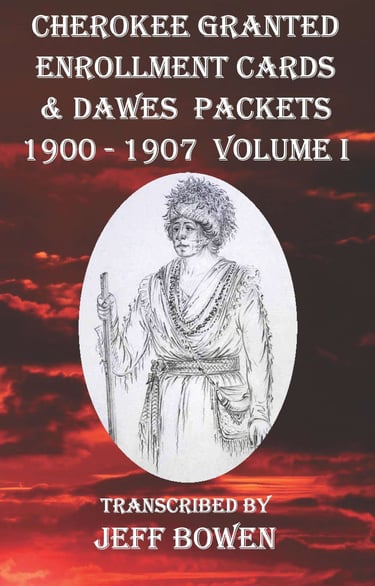
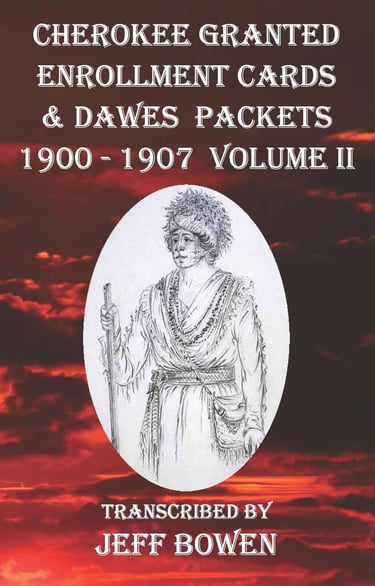
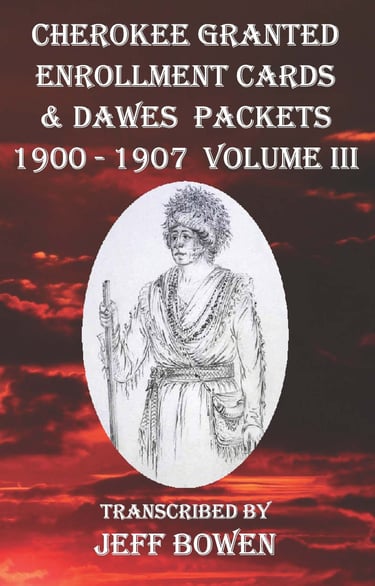
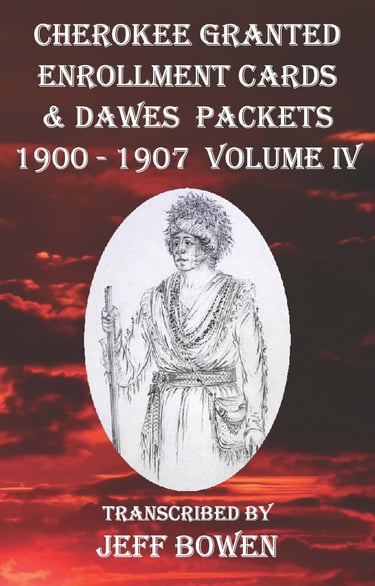
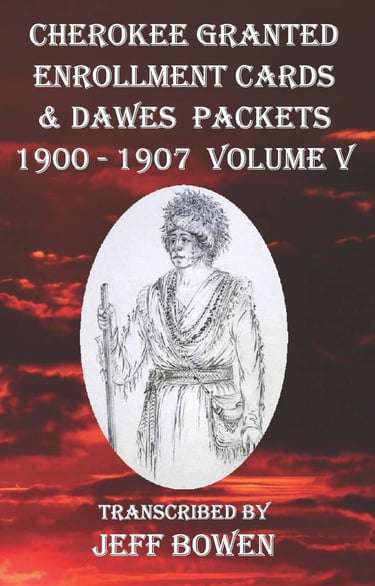
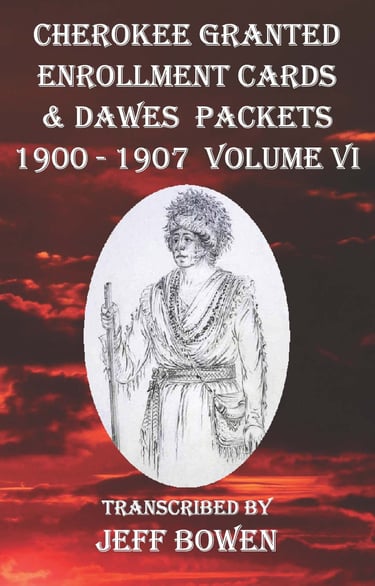
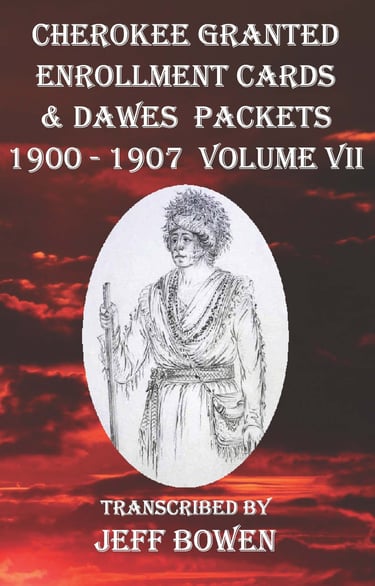
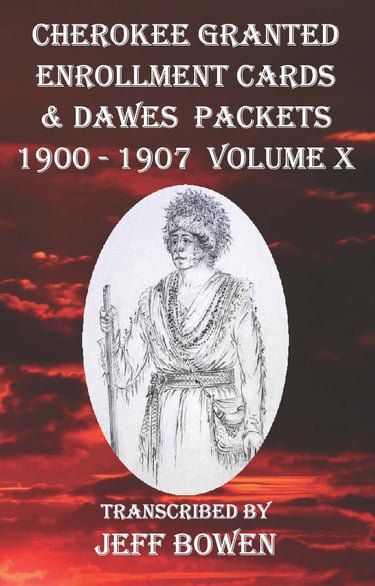
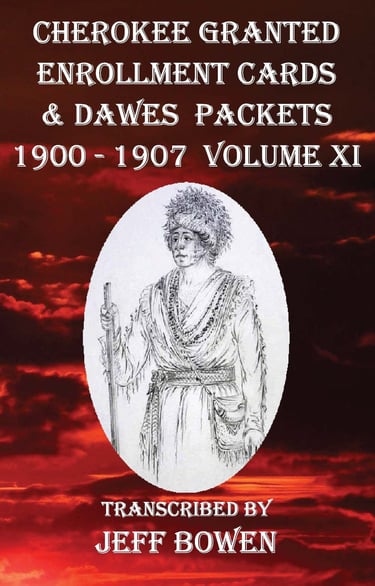
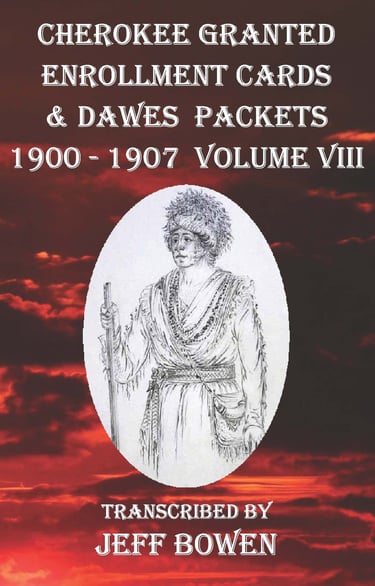
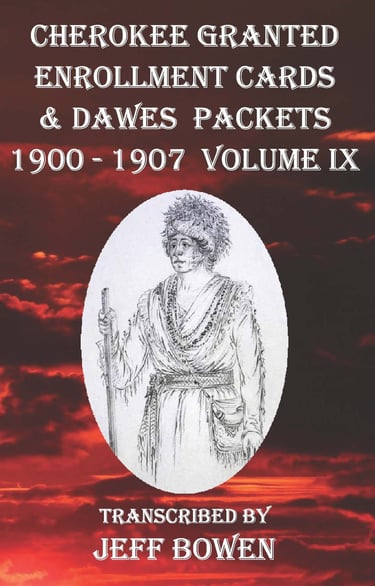
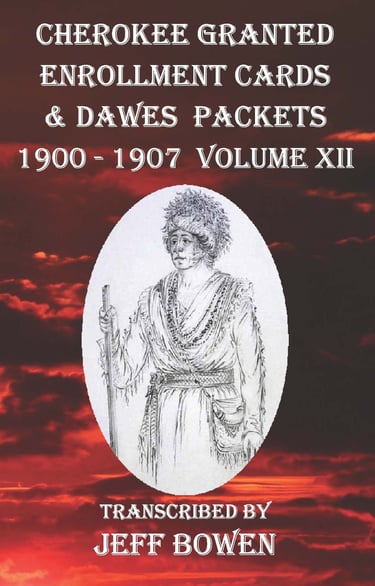
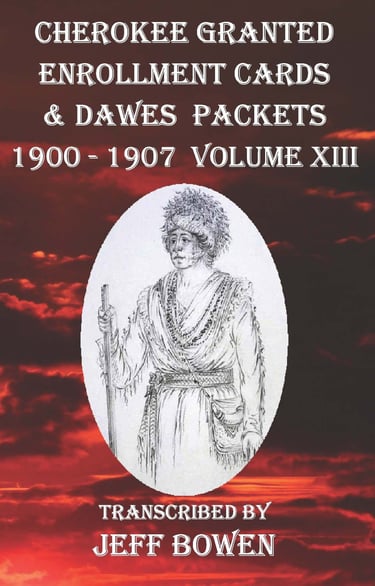
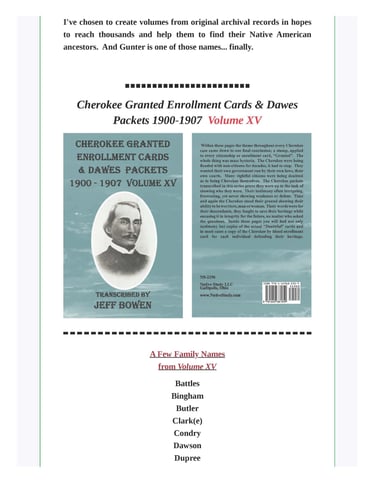
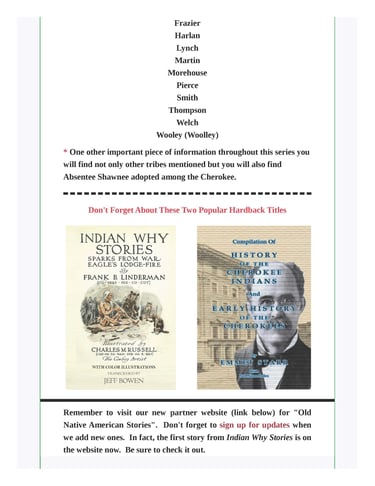
Click on each book to be taken to NativeStudy.com
OR
Check with your favorite
Bookseller to purchase these volumes.


Click on each page below to enlarge it enough to read.

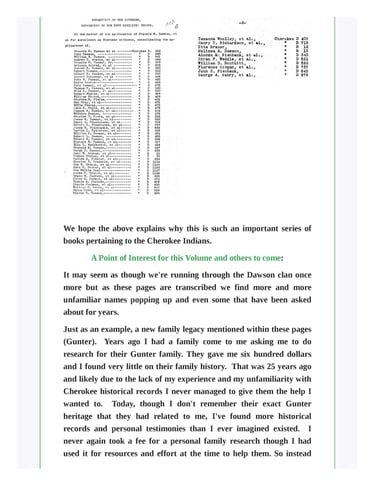
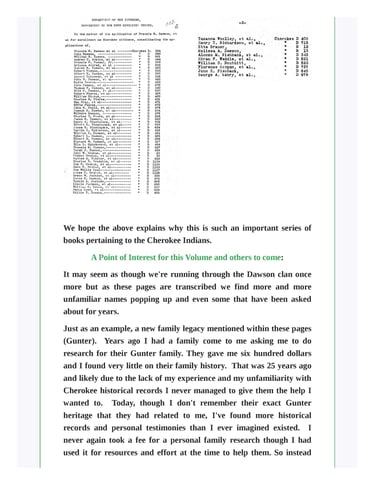
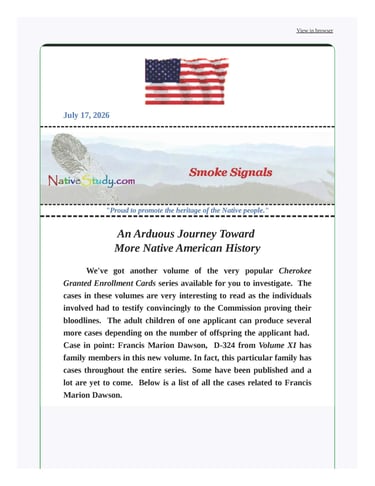
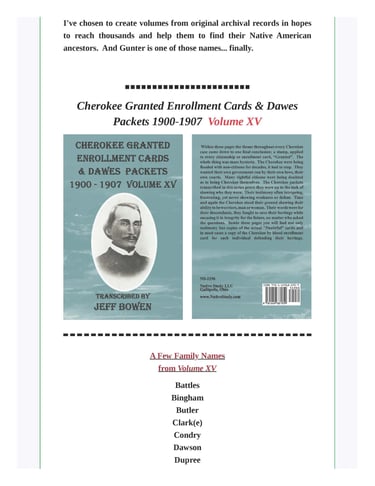
Our most recent newsletter.
*


Let's Refocus on an Old Native American Story
Please tell your friends about this story and how to find it; along with other stories to come. Thanks!
If you would like to know when we have added a different story sign up for Story Updates below.
Your email will only be used to send you updates when we've added a different story.

Copyright © 2026 NativeStudyRefocused.com™
All rights reserved. Unauthorized reproduction of this page, or any subsequent pages on this site is strictly prohibited.

Refocusing on earlier Native documentation, Native American stories, and history most have never heard—honoring tribal cultures and helping you trace your Native bloodlines back to where they began.
Your Life. Your Legacy.